
Safety or Strategy? Explaining Israel’s Intervention in Post-Assad Syria
Art Credit: Asees Bhullar
“We will not move a millimeter from Syria,” announced Israeli Defense Minister Israel Katz during a conference on December 23, 2025, marking over a year of Israeli occupation in Syrian lands beyond the Israeli-controlled Golan Heights.
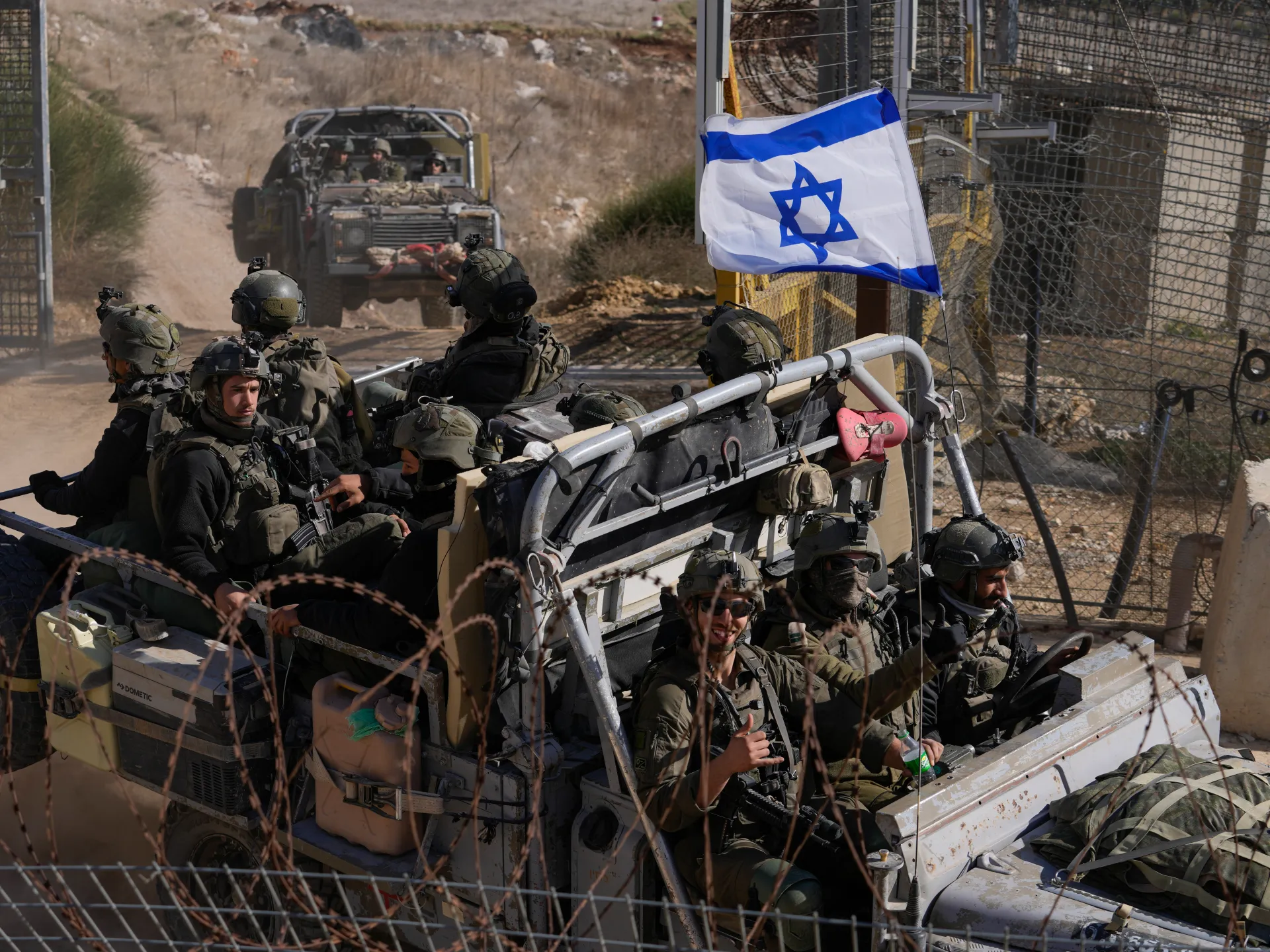
Following the collapse of Bashar al-Assad’s regime in Syria in December 2024, Israel wasted no time in launching an incursion across the Syrian border, capturing military posts and the strategic peak of Mount Hermon. This action, Israeli Prime Minister Benjamin Netanyahu claimed, was a “temporary” measure to “ensure that no hostile force embeds itself right next to the border of Israel.” However, after an entire year of occupation without any major threats emerging at the border, Israel has not withdrawn.
Israel’s aggressive response to Syria’s new government has not been limited to territorial occupation. Israel has launched strikes against military facilities across Syria and interceded in sectarian conflicts between government forces and local minorities. All these actions, Israel has claimed, were either essential responses to urgent security threats posed by the fall of the Assad regime or rooted in its ideological support for oppressed Middle Eastern minorities.
In truth, Israel’s actions have been principally motivated by an effort to exploit the instability in post-Assad Syria in order to expand its military and geostrategic advantage over the country. This response is reflective of a developing foreign policy doctrine in Israel, which abandons long-term diplomatic initiatives in favor of short-sighted strategic gains.
Background
After thirteen years of brutal conflict in Syria, Hay'at Tahrir al-Sham (HTS), a Sunni Islamist militia, broke the stalemate of the Civil War in a swift offensive. The militia captured Damascus on December 8, 2024, ending a half-century of rule by the Assad family.
HTS, led by Ahmed al-Sharaa, was formed in 2017 as an alliance of five Islamist militias and was a U.S.-designated terrorist organization. Al-Sharaa had previously led the al-Nusra Front, an al-Qaeda-affiliated militia in Syria, but allegedly broke ties with Al-Qaeda in 2016. Despite his background, al-Sharaa has restored Syria’s relationship with the West, adopting a more pro-Western stance than his predecessor, who was backed by Russia and Iran. In his first year ruling in Damascus, al-Sharaa reestablished strong relationships with other Arab states and Turkey, secured the end of U.S. sanctions, and made the first-ever visit to the White House by a Syrian leader.
Despite al-Sharaa’s relatively pro-Western orientation, Israel did not hesitate in its response to the new shift in government.
Overnight Strikes
Hours after Assad fled Syria, Israel initiated a systematic airstrike campaign against Syria, targeting airbases, weapon depots, naval assets, and chemical weapons sites. These strikes were aimed at destroying the Assad regime’s military capabilities and preventing them from falling into the hands of the new government. The operation, named “Bashan Arrow,” was highly successful, destroying 70% to 80% of Assad’s military capabilities within two days.
Official statements by Israeli officials framed these attacks as an essential response to ensure Israel’s safety. In a video statement, Netanyahu claimed that strikes were carried out “so that [the weapons] won’t fall into the hands of the jihadists.” According to Israeli Foreign Minister Gideon Sa’ar, “The only interest we have is the security of Israel and its citizens.” These statements imply that Israel’s strikes on Syria were not a matter of strategic advantage, but of imminent national security against an extremist, Islamist terror group.
While al-Sharaa’s terrorist background was some cause for worry, Israel’s alleged security concerns were largely overstated. Syria had been crippled by nearly a decade and a half of civil war, rendering its military capabilities unable to effectively confront Israel’s. An attack on Israel would have reaped disastrous repercussions for Syria, threatening to destabilize the recently reunified country.
Foreign policy analysts note that HTS has adopted an increasingly practical approach in recent years. Syria researcher Dr. Silva Carenzi argues that HTS underwent a “downward scale shift,” in which the organization grew to prioritize a locally-focused political strategy over ideologically-rooted transnational jihad. Therefore, Israel had little reason to believe that a pragmatic HTS-run Syria would plunge itself into yet more instability through a war against its much stronger neighbor.
And thus, Israel’s primary motive was most likely military opportunism. The collapse of the Assad regime provided Israel a once-in-a-generation opportunity to launch widespread strikes against Syria with impunity. Israel capitalized on the moment to eliminate its neighbor’s military capabilities and prevent the new government from becoming a serious military threat for the foreseeable future.
Occupation of the Buffer Zone
At the same time that Israel was launching airstrikes against Syria, its defense forces swiftly occupied territory in the demilitarized buffer zone in the Golan Heights. This buffer zone was established in 1973 as part of a disengagement agreement following the end of the Yom Kippur War in order to prevent clashes between the two countries. Netanyahu claimed that the occupation was necessary to protect Israel’s border from any enemies that might emerge in the area during the instability in Syria.
Once more, Israel’s stated intention of protecting national security falls short. As discussed previously, Israel faced a low threat from the Syrian government itself. While small armed groups remained unintegrated with the state in the southwest of Syria, they too posed little danger to Israel’s safety. Unlike the large rebel groups from the north (e.g., HTS, SNA, and SDF), southern militias were split amongst various weaker factions. In 2018, these rebel groups relinquished their heavy weaponry in a Russian-brokered agreement, meaning that southern rebels were not as well armed as their northern counterparts. Southern factions also tended to be less Islamist and more localized, meaning that they didn’t have the same ideological motivations to attack Israel that certain Jihadist groups would. Even over the course of months, with no major threats emerging on the Golan border, Israel has not relinquished its control over the buffer zone.
Israel’s continued occupation, however, does yield some major advantages. The Israeli-occupied UN buffer zone serves as a potential bargaining chip for future negotiations with the Syrian government. It played this role in September, when talks for a potential security pact between Israel and Syria centered around Israel’s relinquishment of this occupied territory.
More importantly, however, Israel’s violation of the UN buffer zone allowed its forces to occupy the peak of Mount Hermon. The mountain, sitting on the border of Syria and Lebanon, is the highest in all of Syria and the second-highest in Lebanon. This provides Israel with invaluable surveillance information on potential threats that could arise in either country. The peak is a mere twenty-two miles from Damascus, placing the city in range of artillery from its foothills, which Israel also took control of. This position provides Israel with a major geostrategic advantage over Syria, which now remains under a constant threat of a direct Israeli attack on its capital.
Interference in Suweida
Months later, in July, Israel intervened once more in Syria. On July 15, sectarian violence broke out in the city of Suweida, in the south of Syria, between Druze and Bedouin populations. The Druze, an ethnoreligious group indigenous to the Levant, are a minority in southern Syria as well as Northern Israel. After two days of fighting, Syrian troops entered Suweida. Alleging that these forces were targeting Druze populations, Israel launched strikes against government forces around Suweida and at Damascus. Israel Katz declared, “Israel will not abandon the Druze in Syria.”
While these attacks were veiled as an act of solidarity with the Druze of Syria, Israel’s justifications once again warrant skepticism. Israel had not intervened in Syria on behalf of the Druze at any time during Syria’s civil war. In 2015, when the city of Suweida was shelled by rebel insurgents, Israel did not intervene, nor that same month when the al-Nusra front — led by al-Sharaa himself — opened fire on a Druze community in northern Syria. And again, in 2018, when ISIS carried out a series of suicide bombings in Suweida, killing over 200 Druze, Israel did not even release a statement. If Israel’s strikes in July were motivated by protecting the Druze minority, it was incongruous with Israeli policy for the past fifteen years.
That said, Israel’s interference in the Suweida crisis did achieve clear security objectives. In February 2025, Netanyahu asserted, “we demand the full demilitarization of southern Syria, in the Quneitra, Daraa, and As Suwayda provinces, of the forces of the new regime.” Israel even stated explicitly that its strikes on Syria in July were, in part, to enforce this demilitarization policy. By blocking Syrian forces from embedding themselves near the border with the Golan Heights, Israel has prevented al-Sharaa’s government from setting up a potential launchpad against the country. Additionally, through protecting the Druze populations in the south of Syria — which have established autonomy around Suweida — Israel has acquired a potential ally within the country, which can be leveraged to support regional Israeli interests.
Why?
Israel’s aggressive actions in Syria have significantly undermined any possibility of developing a good-faith relationship between the two neighbors, at least for the foreseeable future. This approach seems counterintuitive, as al-Sharaa’s relatively pro-Western government appears to be a marked improvement over the Assad regime, which held close ties with Israel’s regional enemy — Iran. Days after al-Sharaa’s takeover, Maher Mawran, the new governor of Damascus, stressed that “[w]e have no fear towards Israel and our problem is not with Israel.” U.S. officials have spoken to al-Sharaa about the possibility of joining the Abraham Accords — a set of agreements normalizing relations between Israel and several Arab states. Al-Sharaa expressed interest in the idea, “under the right conditions.” While full normalization between Syria and Israel may have been unrealistic given their dispute over the Golan Heights, a closer security relationship between the two countries appeared to be a real possibility.
So why didn’t Israel seize this golden opportunity to cultivate stronger relations with this new Syria? The answer lies in unpacking the Netanyahu government’s foreign policy approach.
Land For Peace vs. Peace Through Strength
Historically, Israel had been more willing to pursue diplomatic initiatives with its neighbors, even when that meant making heavy concessions. After the Six-Day War of 1967, Israel acquired all the Palestinian territories as well as the Sinai Peninsula and the Golan Heights, but it failed to make peace treaties with any of its neighbors. Aviad Rubin, a senior lecturer of political science at the University of Haifa, explains that after the Six-Day War, “policy makers had to maneuver between keeping the biggest possible territory under Israeli control” while “reaching internationally recognized boundaries in order to normalize Israel’s presence in the Middle East.” This foreign policy approach became known as the land-for-peace model. Under this paradigm, both left- and right-wing leaders of Israel relinquished territories acquired in 1967 in an effort to make peace with their neighbors.
Netanyahu’s foreign policy has flipped the land-for-peace paradigm on its head. Gerald M. Steinberg, professor of politics at Bar-Ilan University, describes Netanyahu as a Hobbesian realist, an international outlook that designates all states as adversaries and potential existential threats. He further argues that in contrast to the “grand strategic vision and plans” of Netanyahu’s land-for-peace predecessors, “he emphasizes the tactical dimensions of foreign policy, seeking to preserve options and influence.” Hence, from Netanyahu’s pessimistic standpoint, diplomatic concessions are viewed as risky gambles that threaten Israel’s security and damage its overall bargaining position.
Instead, Netanyahu has championed a new foreign policy doctrine: a peace-through-strength approach. Rubin describes the logic of this approach as follows: “[Israel] should stand fast, build its reputation as a strong and leading nation, and reach reconciliation with the Arab world from a position of strength.” In other words, this doctrine argues that Israel should maintain and improve its strategic advantages in order to enforce the peace of its choice, in the long run.
This foreign policy approach aligns perfectly with Israel’s actions in Syria. According to the peace-through-strength approach, failing to capitalize on the chaos in Syria after the fall of Assad would have meant abandoning Israel’s relative position of strength during a moment of Syrian weakness. Pursuing a diplomatic approach with the nascent HTS government would have been seen as giving leeway to a government that could turn against Israel in the future. Conversely, Israel’s aggressive actions in Syria are seen as increasing its regional strength, providing a stronger military position, and enhancing its bargaining power with Syria in a potential future agreement.
What Does This Mean?
Al-Sharaa’s takeover of Syria offered Israel the rare opportunity to pursue a cooperative relationship with its northeastern neighbor. However, sticking to Netanyahu’s peace through strength doctrine, Israel rejected this opportunity.
Israel’s policy in Syria has yielded some clear benefits for the country. Syria’s military threat to Israel has been eviscerated. Israel has acquired the geostrategically pivotal peak of Mount Hermon. And the nation has fostered a regional alliance with the Syrian Druze in Suweida. But at what cost?
A diplomatic route with Syria had the potential of transforming Israel’s position in the region. A stable security relationship with Syria would have `secured Israel’s northeastern flank, allowing it to focus its sole attention on the border with Lebanon. A Syrian partner could have helped curb the smuggling of arms through its country to Hezbollah in Lebanon, which they use to attack Israel. Eventually, a strong security partnership with Syria could have led to Syria’s entry into the Abraham Accords, making it the first of Israel’s immediate neighbors to join. This would have permanently strengthened Israel’s security and regional legitimacy.
Netanyahu’s ultrarealist, risk-averse foreign policy may calcify Israel’s position in the Middle East. In the past, diplomatic concessions had been key in propelling Israel forward in the realms of security and legitimacy. In 1979, Israel’s return of the Sinai Peninsula to Egypt led to a peace treaty that has lasted to this day. During the 1990s, Israeli negotiations with the Palestinian Liberation Organization, culminating in the Oslo Accords, influenced normalization between Israel and Jordan in 1994. While the Netanyahu government has recently scored limited diplomatic successes through the Abraham Accords, these cases have been restricted to states on Israel’s periphery that had major strategic benefits to gain from it.
While Netanyahu’s peace-through-strength doctrine may allow Israel to further entrench itself as a Middle Eastern fortress state, it is not conducive to building international legitimacy, bolstering regional stability, or guaranteeing Israel’s long-term safety. If Israel wants to achieve true long-lasting peace — with Syria and across the region — it will have to return, once more, to diplomacy.