
Liberation or Leverage? How the Venezuela Precedent Dictates Iran’s Political Future
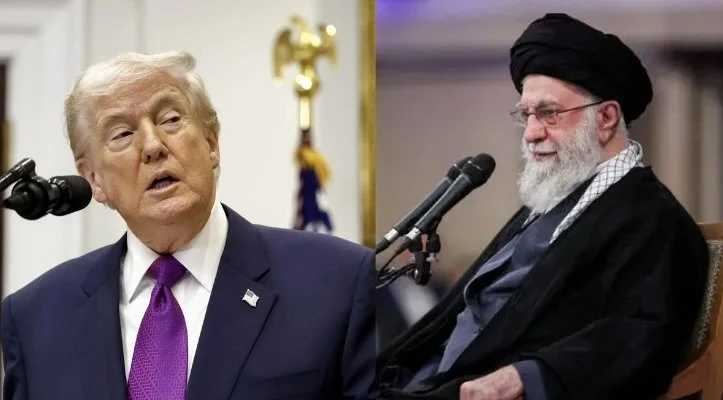
Photo Credit: Asees Bhullar
In the early morning on January 3rd, 2026, the United States stunned the international community with a sudden military raid on Venezuela’s capital, Caracas, that resulted in the capture of Venezuelan President Nicolás Maduro and his wife. The dramatic act of force was carried out without prior notification to Congress, violating the longstanding norm of congressional consent for the use of military force. The Trump administration immediately defended the military operation, charging Maduro with narco-terrorism after previously declaring the drug cartels operating in Venezuela to be unlawful combatants involved in an “armed conflict” with the United States. The military operation ignited a global response, with many condemning what they saw as the United States’ disregard for the principle of the non-use of force, a foundation of international law, warning that America appeared to be abandoning the legal order it once helped to construct.
The Trump Administration then replaced Maduro with his own Vice President, Delcy Rodríguez, instead of backing Maduro’s opposition leader, María Corina Machado, leaving the authoritarian system untouched and disregarding the will of the people.
Concerns were further amplified when President Trump threatened to take similar actions in several other nations, including Cuba and Greenland, in line with the administration’s National Security Strategy, published last month, that promised to restore “American preeminence in the Western Hemisphere.” These statements have fueled fears from leaders all over the world of the normalization of regime change operations conducted outside the international legal framework. But no other nation has more reason for alarm than Iran, the long-time political adversary of the United States Government, and a regime already under intense domestic strain after mass protests against the government erupted across all 31 of its provinces, in response to dissatisfaction with the Islamic Republic and the crash of Iran’s currency.
An Ideologically Divided Iran
Today, Iran is classified as a theocracy run by Ayatollah Ali Khamnei and his immediate circle. Khamnei became the Supreme Leader in 1989 and, unlike other political authority figures, has claimed divine responsibility to preserve the Islamic State. The rigid, theocratic structure of Iran has prevented sustainable political change as regime survival is seen as a religious right. The problem, therefore, lies not in the lack of public outrage and opposition to the regime, but in its immutable structure.
Moreover, Iranian society has been split over the idea of Western intervention for decades. Many older generations, who have widely blamed former President Jimmy Carter for the rise of the Islamic Republic in the 1970s, view Western interference as dangerous and illegitimate. These traumas have led many to adopt a more nationalistic point of view that reinforces the idea that foreign liberation efforts ultimately serve foreign interests, not the Iranian people.
Younger generations, in contrast, have only known the Islamic Republic. They see the regime not as a symbol for national independence but as a system that has persistently and violently suppressed women’s rights, political dissent, and personal freedoms. Trump’s promise to “rescue” protestors if the regime continues to violently suppress protestors appears to have emboldened many who view external pressure as a source of liberation from a system they believe has denied them their rightful freedoms and voice.
But this generational divide is not a simple endorsement for American Intervention. Protestors have been advocating for a democratic future, weary of foreign military involvement and its consequences. A political future facilitated by the Trump Administration, as shown in the results of Venezuela, would likely not represent the interests of the Iranian people.
Nonetheless, the perception that Trump is willing to act, rather than merely threaten, seems to have altered the political ambitions of not just the protestors, but the regime officials as well.
Escalation After Venezuela
At the time of this writing, the Iranian Officials have responded to the shifting political landscape with an unprecedented crackdown on protestors, killing at least 6,221 known individuals. Since January 8, Iranian authorities imposed a widespread internet and telecommunications blackout, a move that appears designed to conceal state repression while limiting protestors’ exposure to Western media and President Trump’s remarks, which risk sustaining hopes of a foreign-instigated regime change.
Tensions between the United States and Iran have further escalated with the deployment of a carrier strike group led by the USS Abraham Lincoln and additional vessels to the Middle East, allowing Trump to order airstrikes on Iran at a moment’s notice. These actions have proven the Venezuela operation to be more than merely an isolated incident and the opening move of a broader coercive strategy.
This escalation has alarmed U.S. allies across the Middle East. Arab states have urged both the United States and Iran to show restraint, warning that a U.S.-Iran conflict could destabilize the region and disrupt global energy markets. At the same time, Trump has already distanced himself from the protests, now using the crisis as leverage to demand a new nuclear agreement, warning that if Iran does not accept, it will face further consequences.
For Iranian leaders, this is not symbolic signalling. This new era of American foreign policy puts officials in a precarious position. Any attempts to suppress demonstrations risk further radicalizing protestors and validating their belief that outside forces can dismantle the regime. Yet any concession can be interpreted as weakness at a time when their biggest political adversaries are seemingly eager to exploit instability. Trump’s actions, therefore, function as both a deterrent and destabilizing force, reshaping Iran’s domestic politics.
A Moral Conundrum
Ultimately, Trump’s capture of Maduro forces a layered dilemma, exceeding questions of legality. On one hand, the use of military force against a sovereign leader without international authorization violates the United Nations Charter and undermines the principles that have governed international conduct since World War II. The erosion of these norms sets the precedent for other powerful and potentially dangerous nations to engage in unilateral interventions freely, undermining the principle of respecting state sovereignty.
Yet on another level, Trump’s new approach to diplomacy forces the question: to what extent do the ends justify the means? Can illegal acts still create morally defensible outcomes if they help dismantle an oppressive system? For those who have suffered under the current Iranian regime, the erosion of international order seems insignificant compared to the possibility of relief and reform. Trump is already framing his actions not as a humanitarian intervention but as strategic coercion, forcing Iran to agree to new nuclear agreements instead of protecting the Iranian people. His rhetoric and actions in Venezuela suggest that his interests with Iran put the protestors, like Venezuelans, second to national interests.
The sad truth is that a democratic future for Iran is highly unlikely, even with the fall of the regime. In Iran’s case, the problem is compounded by the structure of the regime itself. Iran’s political system is deeply theocratic, with power centered in clerical institutions, the Islamic Revolutionary Guard Corps, and unelected elites. Even with the current government dismantled, it is likely that one of these other groups could take control, replacing one authoritarian system with another.
A Case for External Support, not Intervention
What the Iranian people need now is not foreign intervention, which prioritizes foreign-imposed political outcomes, but sustained external support. History has shown that foreign actors can play a constructive role by financially and militarily supporting Iranian civil society and independent media, rather than engaging in occupation or forced regime change. Additionally, applying external pressure, not in the form of warfare, but in the form of diplomatic pressure and sanctions can lead to institutional change without military intervention. Iranians themselves must be at the forefront of regime changes, with foreign powers assisting rather than dictating the outcome.