
How Proposition 50 Tests California’s Commitment to Fair Redistricting
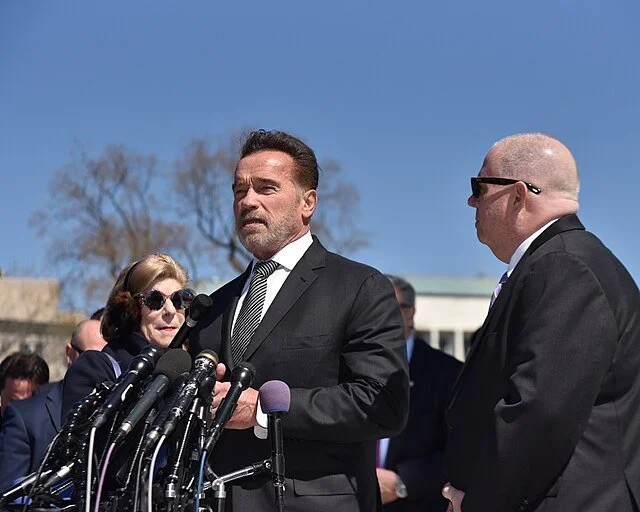
Photo Credit: Maryland GovPics
The United States has entered a new era in which redistricting has become both a weapon and a defense method in the pursuit of partisan power. California’s proposed mid-decade redistricting measure, known as the Election Rigging Response Act, or Proposition 50, passed on November 2025, reflects this increasing shift. Just over a decade after voters removed politicians from the map-drawing process in California, policymakers are now seeking to take it back, arguing that fairness in electoral outcomes demands fighting fire with fire.
California established its Citizens Redistricting Commission through voter-approved reforms to ensure fair and impartial redistricting. In 2008, Proposition 11, also known as the Voters FIRST Act, shifted the power to draw state legislative districts from the legislature to a new independent commission. Two years later, Proposition 20 expanded the commission to include the U.S. House districts. The commission is composed of 14 citizens selected through a rigorous process. The 14-member commission is chosen through a nonpartisan lottery and appointment process meant to keep politicians out. By design, it includes five Democrats, five Republicans, and four independents; approving a map requires a supermajority with support from all members of the commission. State law prevents the commission from favoring or discriminating against incumbents or parties, thereby ensuring a bipartisan consensus in map-making and preventing one-party control.
This model was designed to restore public trust in California’s redistricting process. This measure remained popular and effective, with 72% of likely voters saying having an independent commission for congressional maps has been “mostly a good thing” as of 2025. The commission's purpose has been to embody procedural fairness in redistricting, removing the process from the legislative process to prevent gerrymandering and ensure that voters choose their representatives.
Redistricting usually happens once every ten years after the census; however, Texas undertook an unusual mid-decade redraw in 2025, which became an example for political maps across the nation before the 2026 congressional elections. President Trump initially floated this idea in June, when Texas Governor Greg Abbott called a special session in July to redraw the congressional district map, aiming to add five Republican congressional seats. By August 22, the Texas Legislature had approved a new congressional redistricting plan, enacted without any court order, underscoring its undeniably partisan nature.
Currently, Republicans hold 25 of Texas’s congressional districts, where the new lines are projected to give the GOP control of 30 of 38 seats. To secure five additional Republican seats, urban areas like Dallas and Houston, democratic voters will be effectively “packed” into a few heavily blue districts. Another example is that the proposed map divides a Democratic-leaning county (Hays County), which narrowly voted for Kamala Harris in 2024, between two Republican districts, effectively “cracking” the district to decrease the Democratic voter share.
So, what will Proposition 50 actually do? The California Legislature would draw new congressional maps for the 2026 through 2030 elections, temporarily replacing the state’s independent Citizens Redistricting Commission. After 2030, control would return to the commission for the 2031 cycle. Under the current map, Democrats hold 43 of 52 congressional seats, while Republicans hold 9. That means Democrats currently control about 82.7% of seats, with approximately 60% of the total vote. In comparison, Republicans hold 17% of seats, with about 40% of the vote, already demonstrating a sizable gap between votes and representation.
A legislative-drawn map could add up to five Democratic seats, shifting California’s delegation to 48 Democrats and 4 Republicans. According to an analysis by the Public Policy Institute of California, the new lines would convert 13 competitive districts (six leaning Republican and seven leaning Democratic) to nine competitive districts, with all but one favoring Democrats, thereby sharply reducing the number of swing seats.
Using the data from the 2024 House elections, this would leave California’s Republicans with just four districts statewide. The plan’s effect is apparent, and it has been targeted to transform many Republican-leaning districts into Democratic-leaning ones, with an overwhelming prioritization of partisan gains over competitiveness. While supporters describe this as restoring balance on the federal level after Texas’s mid-decade redistricting, under Prop 50, it is important to note that California’s internal representation will become even less proportional to its vote share from before.
As the Texas Tribune put it, this gerrymandering measure by Texas set off a bipartisan war across the U.S., where Democrats across the country feel obligated to consider countermeasures. This raises alarm about the lengths the two parties might go to secure power for the 2026 elections between census cycles. In public statements, Democratic leaders framed Prop 50 as a moral response to an existential threat. Assembly Speaker Robert Rivas promised California would “fight fire with fire” and “do whatever it takes to defend democracy,” while Senate President Mike McGuire described Texas’s mid-decade maps as part of “Trump’s cynical ploy” to “rewrite the rules.”
Considering this perspective, refusing to act would mean being complacent in the face of anti-democratic tactics. The logic of fighting gerrymandering with gerrymandering asks Californians to erode their own and an admired democratic institution, the Citizens Redistricting Commission, in the name of saving democracy. Prop 50 was born out of fear and moral urgency, the belief that in order to protect democracy, one must control it. But if fairness depends on who benefits or who wins, then is it really fair?
As former Governor Arnold Schwarzenegger warns, “They want to dismantle this independent commission…that because we have to fight Trump, we have to become Trump,” which perfectly captures the contradiction of the goals of Prop 50. To fight for democracy, you will have to abandon democratic principles in California.
Prop 50 has undoubtedly divided Californians along partisan lines, with 84% of Democratic likely voters in support and 89% of Republicans in opposition. That polarization reflects a broader assumption that fairness itself has become politicized, where trust in institutions is almost nonexistent. Although the measure was written in response to Texas, California’s proposed fix risks repeating the same mistake in reverse, where partisan wins signify democratic strength. By suspending its independent redistricting commission, a reform created solely to prevent partisanship in map-drawing, the state would abandon the principle it once championed and the example it once set.
More specifically, Prop 50’s most immediate consequence would be a decline in electoral competition and engagement. The measure’s purpose is simply to secure congressional seats for 2026; however, it dismisses the internal consequences of representation within California. By shrinking the number of competitive districts from 13 to 9, with nearly all favoring Democrats, voting itself becomes discouraged, especially when you know your vote won’t change the outcome, and participation stops feeling meaningful. Research from the Brennan Center shows that turnout is 8 to 10 percentage points lower in legislature-drawn maps than in those drawn by independent commissions, even when districts are equally competitive. This demonstrates the importance of competition for increased participation, even despite the benefits of having an independent commission. In other words, the redistricting will alter voter behavior for the next few years as the state moves from the independent commission to the legislature. Fewer people will engage in the process, such as volunteering, donating, or running credible campaigns, in districts where the outcome is predetermined. The state’s roughly 40% Republican electorate will be condensed into just four congressional districts, leaving entire regions without meaningful representation and fewer opportunities for their concerns to be heard.
With fewer competitive races, incumbents will face weaker challenges and have less incentive to listen, and the lines that divide California politically will only strengthen. Despite California being a Democratic stronghold, its population is not politically uniform, but the passage of Prop 50 would make it appear so. Any compromise between parties that once existed will grow even harder as representation narrows, and polarization deepens in a state where many already feel unseen.
Prop 50 also forces Californians to decide whether they still trust the principle that shaped their vote for the commission, where fair maps come from fair methods, without considering the five congressional seats that could balance out Congress. In this context, fairness can be understood in two ways. As a process, it means we can trust institutions to make decisions even when the results are inconvenient. As a result, it measures what feels fair based on the outcomes, and changing the rules may seem justified if others have done the same. Prop 50 marks this shift from fairness as a process to fairness as a result.
It is crucial to note that this tension over fairness is not unique to California. Nationally, Americans are concerned about the direction of democracy. In an August 2025 Reuters/Ipsos poll, 57% of respondents said they believe U.S. democracy is in danger, and 55% said ongoing redistricting plans, such as California and Texas, are bad for democracy. Shaun Bowler, a political science professor at UC Riverside, found that voters view gerrymandering with “the same disdain they reserve for bribery and other forms of political corruption,” demonstrating how deeply partisan map-drawing can erode confidence in elections. In this context, the language of “defending democracy” has become a moral license for almost any tactic. Each side now operates with the logic that past good behavior makes a future negative action seem more acceptable, thereby creating a perceived balance. This is precisely what we see from Prop 50, in which California has once played fair, but given the influence of Texas or Trump, now feels entitled to overreach in self-defense.
By abandoning the principle that fairness should guide the process, Proposition 50 risks eroding trust in democratic institutions and undermining the importance of a competitive electoral process. California could have claimed the moral high ground, as one of the few states that proved democracy could rest on process, but that example is now in jeopardy. The state can claim to be defending democracy, yet in doing so, it has compromised the democratic principles that made the commission worth defending. Through the measures by California and Texas, both may gain seats in the 2026 elections, but both have lost integrity in the process.